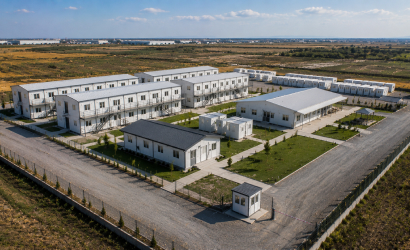

Building an unpermitted prefabricated house is not considered a minor violation as many people think. Prefabricated structures can be quickly assembled, appear portable, or be produced with a lighter system compared to reinforced concrete houses. However, if intended for permanent use, they acquire the status of a building in terms of zoning regulations. For a prefabricated house placed on a plot, connected to the foundation, with electrical and water connections, and used as a living space, ignoring the permit process can result in administrative fines, sealing, demolition orders, subscription issues, and loss of value in sales. Before constructing a house, the zoning status of the land, building rights, setback distances, project requirements, and permit procedures should be checked. Taking shortcuts may lead to higher costs and significant time loss later.
Whether a prefabricated house requires a permit is not determined solely by the materials used in production. How the structure is placed on the land, whether it is intended for permanent use, whether it has infrastructure connections, and the land use decision in the zoning plan are important. If a structure is established as a living space, remains in the same place for a long time, and is anchored to the land, the permit issue arises. The mention of land as a plot, field, vineyard, or garden in the title deed alone does not grant building rights. Making house plans without obtaining a zoning status document is risky. Some parcels are open to residential construction, while others may be restricted due to agricultural nature, protected areas, lack of road frontage, or plan decisions. Prefabricated house prices should be checked before assessing land suitability. An uneconomical house on an unsuitable parcel may turn into a significant loss because a permit cannot be obtained.
When an unpermitted structure is detected, the authorities may prepare a building suspension report. Construction or installation activities are halted, the structure is sealed, and the violation is requested to be remedied. The fine varies depending on the size, nature, location of the structure, and the level of violation. Not all cases have the same amount. The floor area, intended use, environmental impact, and level of non-compliance with the zoning plan influence the calculation. Continuing work after sealing can lead to more severe consequences. Some individuals see the house as small parts and underestimate the seriousness of the process. However, once the administrative process begins, it is necessary to apply on time, complete project deficiencies, or make the structure compliant. Paying the fine does not automatically legalize the structure. Fines and permit compliance are separate issues. Even if the fine is paid, ongoing violations may still pose a risk of demolition.
One of the biggest risks with unpermitted prefabricated houses is the demolition order. If the structure cannot be permitted within the relevant period or cannot be brought into compliance with the zoning plan, the authorities may initiate demolition procedures. Demolition does not only mean removing the house. Costs for transportation, dismantling, land damage, loss of interior fixtures, moving belongings, and reinstallation also arise. Finding a solution later for a house with a demolition order becomes more exhausting. Drawing project plans, obtaining legal support, making administrative applications, and re-evaluating the land status take time. When comparing steel house prices and prefabricated structure costs, permit expenses are sometimes seen as a minor item. However, the risk of demolishing a house built without a permit can be much higher than the initial avoided costs. The best decision is to complete the permit process before constructing the house.
The impact of an unpermitted structure is not limited to fines. Problems may arise in electricity, water, natural gas, sewage, and official subscription procedures. Even if temporary connections are established in some areas, building documents may be required for permanent and regular use. Houses without a usage permit are approached more cautiously by buyers during insurance, credit, and sale processes. An unpermitted prefabricated house may lose value during future title deed transfers. Buyers want to see the permit and project for the structure. If a bank loan is involved, appraisal documents are examined. Structures without a permit, contrary to zoning, or incompatible with the title deed may cause financing obstacles. For homeowners, a makeshift installation that seems practical initially can reduce bargaining power years later during sale. Issues can become more complex in cases of inheritance, joint ownership, or land transfer.
Many people want to build prefabricated houses on land classified as farmland. Those seeking a quiet life away from the city, with a garden, may find building a small house on land attractive. However, in lands with ongoing agricultural use, building rights may be limited. Road frontage, parcel size, non-agricultural use permits, village settlement boundaries, and plan decisions are checked separately. In rural areas, the fact that neighbors have built structures does not provide legal security. Each parcel is evaluated according to its own zoning status. Some structures may be remnants from old times, others may have been built with different permits. Building a structure without a permit is quickly acted upon in case of notification or inspection. Placing a prefabricated house on farmland and establishing water and electricity connections also reinforce the impression of permanent use. Therefore, before purchasing land, official zoning information should be checked, the area where the structure will be built should be marked on the plan, and the permit process should be learned from the start.
The first step to avoid the risks of unpermitted structures is to learn the zoning status of the land. Then, architectural, static, electrical, and mechanical projects, ground information, foundation plan, and permit application are prepared. Since prefabricated houses are produced with a lightweight system, engineering calculations are still necessary. Wind, earthquake, foundation connection, roof load, and installation passages should be included in the project. When choosing a house model, simply considering the number of rooms and price is not enough. The setback distance of the land, road frontage, infrastructure points, foundation area, and permit duration are included in the budget. The manufacturer’s offer should clearly state what is included. The foundation, transportation, crane, assembly, project, permit fee, infrastructure connection, and interior fixtures are summarized in the same table. Although the permit process may seem longer, it provides a much more solid foundation for the use, sale, insurance, and subscriptions of the house. For those planning to build a prefabricated house, the safest way is to complete the legal documentation before starting installation and proceed with a project suitable for the land.