
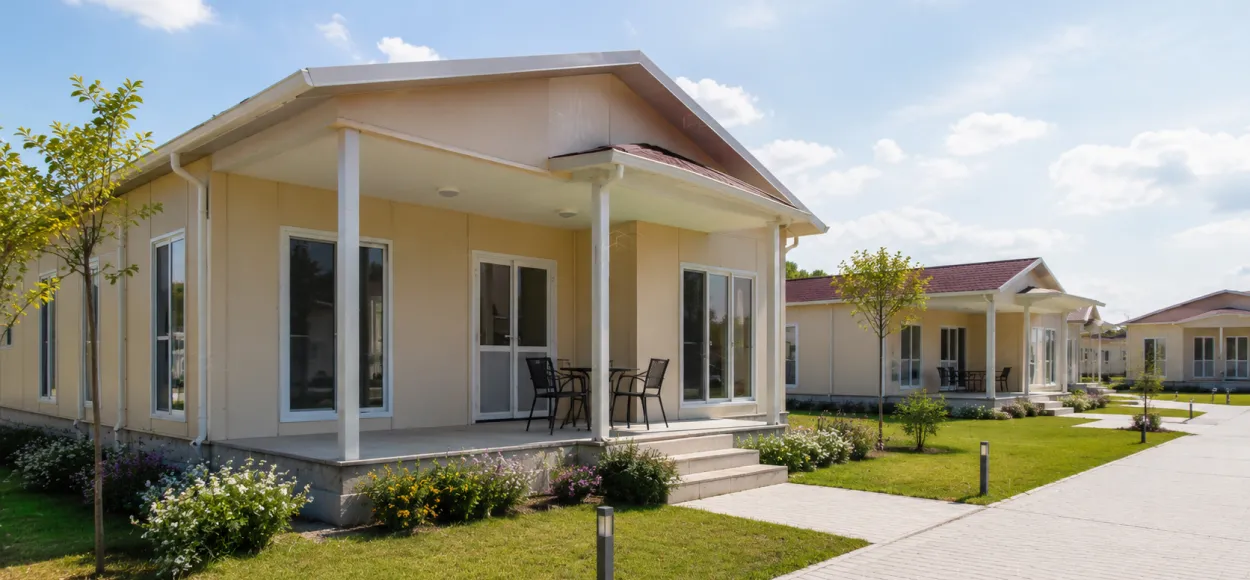
Prefab houses are not only considered an alternative building model in recent years. They now occupy a strong position on the agenda of users seeking faster, more planned, and more accessible solutions to housing needs. Changing life expectations, increasing housing demand, cost concerns, and the desire to create usable living spaces in a shorter time frame all contribute to this interest.
Today, the profile of users who prefer prefab houses is quite broad. Families wanting to build a house quickly on their land, those planning a summer residence, individuals seeking a calmer rural lifestyle, investors considering construction, and institutions with urgent post-disaster housing needs are closely evaluating this construction system. There is no single reason behind the popularity of prefab houses. Speed, cost control, production standards, design flexibility, and comfort of use shape this process together.
One of the main reasons for the popularity of prefab houses is their quick assembly. In traditional construction processes, factors such as site preparation, material supply, and labor planning can extend the project duration. In prefab structures, the main components are produced in a factory environment, and the on-site assembly process proceeds in a more controlled manner.
This method provides significant time advantages to the user. Someone with a ready land can reach their living space with a more planned schedule without dealing with lengthy construction processes. International analyses also highlight the potential of modular and prefab construction techniques to shorten project durations, which is one of the important reasons for interest in these systems.
For those wanting to build a house, budgeting is one of the most important topics. Additional expenses that arise later in construction, changes in material prices, and labor costs can challenge the total budget. Since the production process in prefab houses is more standardized, cost planning can be made more clearly.
This provides an advantage during decision-making. When factors such as square meters, number of rooms, building type, roof system, insulation options, and interior layout are predetermined, the overall project scope becomes clearer. Thus, the user not only sees the current price but can also better evaluate the features with which the structure will be delivered. If you are curious about prefab house prices, you can visit the link.
In prefab building systems, a significant portion of production takes place in a factory environment. This ensures that structural elements are prepared with specific measurements and production standards. Controlled manufacturing processes provide more organized quality management in material cutting, panel preparation, load-bearing systems, and connection details.
The reduction of on-site work contributes to a more planned progression of the implementation process. Factors such as weather conditions, labor variability, and site density have a more limited impact. This construction approach supports the wider acceptance of prefab houses as a reliable housing alternative.
When purchasing a prefab house, attention should be paid to the manufacturer's experience, the quality of materials used, insulation details, the assembly team, and after-sales support. Working with the right manufacturer can offer a strong solution for long-term use.
In the past, prefab houses were associated with limited design options. Today, this perception has largely changed. Modern prefab houses can better meet personal needs with different room plans, facade options, etc.
Single-story prefab houses, two-story models, compact summer houses, plans suitable for large families, or simpler rural housing solutions appeal to different user groups. This variety transforms prefab houses from merely an economical option into a construction alternative that can be shaped according to lifestyle.
People no longer seek only structures that meet their shelter needs. Details such as spacious living rooms, functional kitchens, sufficient storage, natural light, connection to open spaces, and aesthetic facades also play an important role in decision-making.
Sustainability in the construction sector is becoming increasingly important. Energy consumption, material use, construction waste, and production processes are becoming more visible in building preferences. Reports from the United Nations Environment Program on the construction and building sector show that this field has a significant share in global energy consumption and carbon emissions.
The prefab production approach can make material use more planned. Manufacturing in a factory environment, with measured cuts and controlled supply, can help reduce waste on site.
Another factor increasing demand for prefab structures is the need for rapid construction after disasters. Creating safe living spaces quickly in the event of earthquakes, floods, fires, or other emergencies is of great importance. Prefab houses can be evaluated with their fast production and assembly advantages in such scenarios.
This feature is not only considered for temporary post-disaster shelter. Prefab systems can also offer practical solutions in rural areas, newly developing regions, or places with urgent housing needs. This flexibility is an important advantage in countries like Turkey with diverse climate and terrain conditions.
The interest in prefab houses cannot be explained solely by technical advantages. People’s living expectations are also changing. More simple, nature-close, manageable-cost, and personalized living spaces are increasingly in demand.
Small plots, garden and orchard areas, summer regions, and rural settlements are among the areas supporting the preference for prefab houses. Users now seek solutions that can be decided more quickly, progress more planned, and can be scaled according to needs, rather than long-lasting heavy construction processes. Steel houses, due to their durability, aesthetics, and price advantages, are also a response to these needs. For steel house prices, you can visit the link.
The rise in popularity of prefab houses is a natural result of speed, cost predictability, modern design options, production standards, sustainability expectations, and changing lifestyle habits. With the right project planning and a reliable manufacturer, prefab houses can offer comfortable living spaces that meet various needs.
Makro Prefabrik develops solutions for users' housing, summer house, rural living, and investment needs with prefab house models of different square meters and plans. Before building a prefab house, the intended use, land conditions, budget, model preference, and long-term expectations should be evaluated together. This approach ensures both choosing the right house and managing the construction process more safely.