
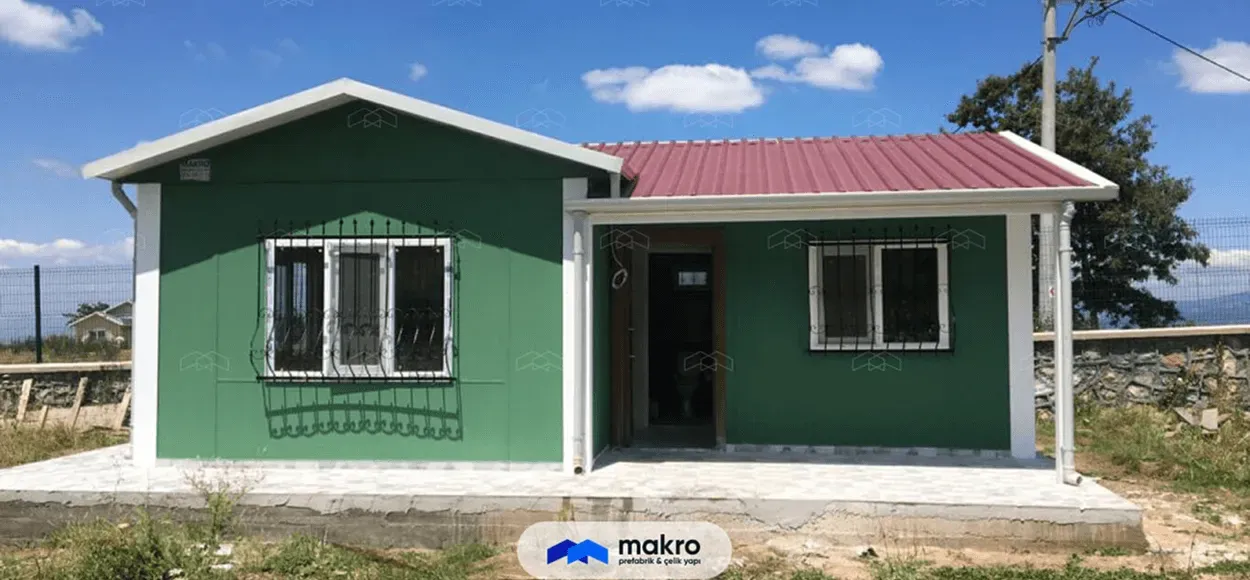
Recently, the use of houses produced in factories has started to increase. Because these houses are quite affordable. These structures are not only cost-effective but also very durable and long-lasting. Thanks to these advantages, these houses are used all over our country. The cost of these houses is also among the topics of curiosity. We have researched the costs of these houses and the factors affecting their costs and have written about them in this article.
Houses produced in factories are used all over our country throughout the four seasons. From this perspective, these structures are among the most suitable building models for our country. Thanks to the prefabricated house prices being affordable, their preference rate in our country is quite high. Especially people who want to build a house in a village prefer these structures. Because these structures are both affordable and durable.
When we look at the cost of these structures, firstly, it is necessary to focus on the cost of the buyer. The buyer's primary expense is the land cost. The price of the land varies depending on its size and location. Additionally, official payments required for the building registration permit have recently become quite high. All these expenses constitute the cost of building on the land. In terms of house costs, houses produced in factories remain much more affordable. There are also some factors that influence the price of these houses. We have listed these factors below in the next section.
Recently, many people in our country have started purchasing these houses produced in factories. Indeed, these structures, built with durable and affordable ready-made house prices, have become much more preferred compared to reinforced concrete structures. As building technology advances and some services included in the price of these structures, the usage of these structures will increase even more in the coming years. There are also some factors that affect the prices of these structures. We have researched these factors and listed them below.
One of the main reasons for the increase in the prices of these structures is material inflation. Some manufacturers stockpile materials. However, each manufacturer has a certain capacity. Therefore, material inflation increases the profitability of the manufacturer or the price of houses. Indeed, after labor costs, material costs are one of the most important items to be added to the house price.
The price of a house is generally calculated based on square meters. Therefore, the larger the house, the higher its price. Besides the price, larger houses are more practical for use. However, many different factors play a role in choosing the size of the house. When comparing the price of factory-produced houses with the price of a reinforced concrete house of the same size, these structures remain much more affordable.
Some materials of these structures are included in the building plan. However, some materials are optional. For example, normally a house's roof is made using painted galvanized steel, but shingle or metal tile can also be used if desired. However, metal tile and shingle are optional materials. You can pay a very small additional amount to use these materials. Additionally, any desired material can be used in the house you choose. Especially, the use of different materials in addition to those used for insulation of these structures is also in demand. We have written about the insulation materials used in these structures and their advantages in the next section.
Factory-produced house models are used in many different areas, especially in villages. Because these structures are affordable and insulated. The insulation of these structures is carried out in three different stages. The first stage begins with the walls. Materials such as EPS foam and stone wool are used in the walls and roof to provide effective insulation. Thus, heat transfer from the walls and roof is prevented. Thanks to these materials, effective insulation is provided inside the house.
The final stage of insulation is carried out on the windows. In this regard, windows are PVC framed and double-glazed. The heat gets trapped between these two glasses, preventing heat transfer. This window structure also makes the house liquid-insulated. At the end of these three stages, the house becomes heat, liquid, and sound-insulated. Thanks to this insulation, effective heating and cooling can be performed inside the house. This can also help you save on electricity and natural gas bills. You can purchase one of these structures immediately and start using it.