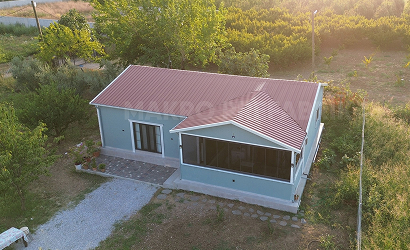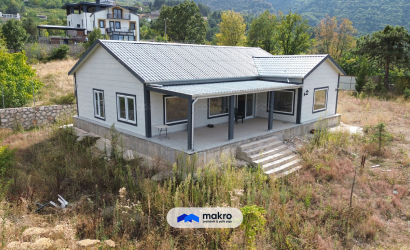
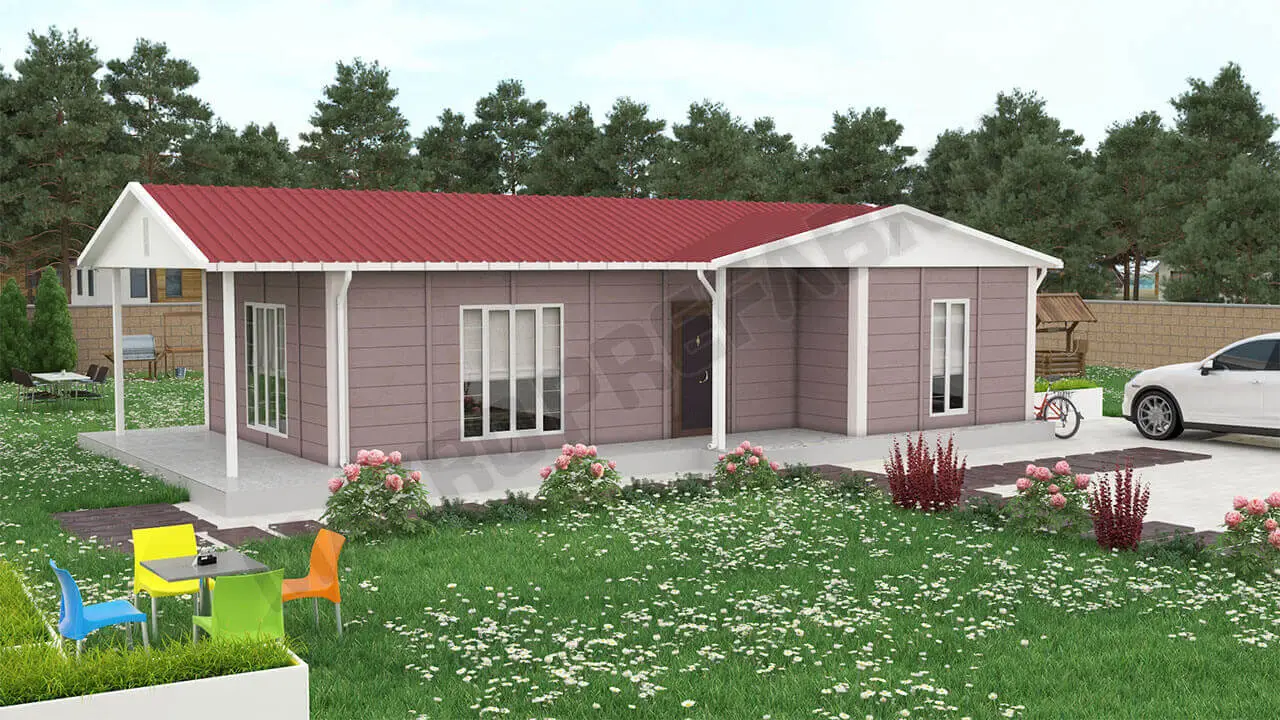
Due to recent economic changes in our country, reverse migration has begun. Both people returning to their hometowns and those wanting to own a summer house are interested in having a prefabricated villa model. As a result, many manufacturers have entered this market. However, many questions remain in the minds of those who want to purchase these homes. One of these questions is often asked by people who want to build their homes by the seaside.
If you want to buy a portable house to place in a seaside area, your home will not develop moisture or mold. The main reason for mold formation in a house is the retention of moisture in the ceiling or walls. In a normal house, mold can occur due to leaks from plumbing or insulation deficiencies. Portable houses do not experience moisture or mold problems. To better understand why, it is necessary to examine the insulation and plumbing work done in these homes.
Insulation work in portable homes is given high importance. Additionally, the insulation work allows for climate control inside the homes. For this reason, high-quality materials are used in insulation, and the process is carried out in two stages.
The first stage of insulation involves insulating the walls. The insulation material used in the walls is EPS foam. This material is widely used in construction around the world for insulation purposes. The thickness of this material is 80 mm, and its density is 16 kg/m³. Additionally, the ceiling is also insulated, which is a very important part because during rain or snow, the first part of the house to be affected is the roof.
The second stage of insulation involves completing the insulation work entirely. In this stage, galvanized sheet metal is used for the roof. Since galvanized sheet is a slippery material, snow does not accumulate on it; it begins to slide off as it falls. This allows the water to drain off without penetrating the material. Optional materials include shingle and painted galvanized sheet. Furthermore, PVC windows are used as window material. PVC is highly insulating and, due to its shape, stands at a right angle, preventing rainwater from entering the house.
All the materials used ensure the insulation of the house. Thanks to the insulation, interior climate control costs decrease, making prefab house prices more affordable. All materials used provide not only thermal and liquid insulation but also sound insulation, allowing you to be isolated from your surroundings. Additionally, because of the materials used, your house’s walls will not retain moisture, preventing mold and dampness inside the house.
Especially in houses located in the Black Sea Region, the question of whether mold and dampness occur is very common. The Black Sea region is quite humid and receives a lot of rainfall. For this reason, concrete houses here tend to absorb moisture, which over time turns into mold. Since portable houses do not absorb moisture, mold formation is not observed.
Thus, we have discussed the possibility of moisture and mold in portable houses and the insulation work carried out. If you want to own a portable house that does not retain moisture or mold, you can contact our customer representatives.