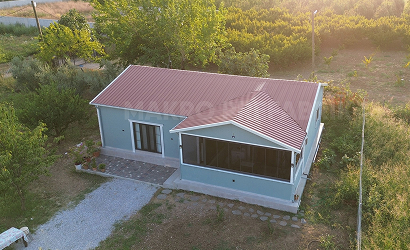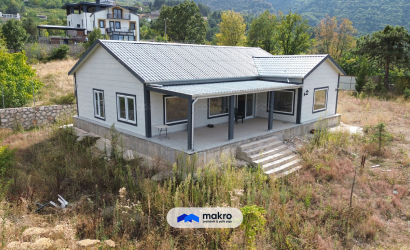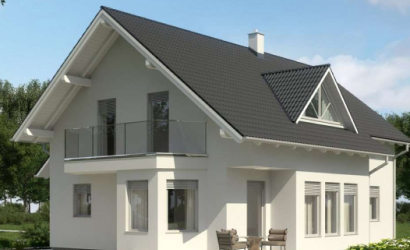
Portable homes have gained prominence in recent years, both for the many advantages they offer users and for their aesthetic and symmetrical architectural design. As a result, we see many prefabricated houses around us. Naturally, both those who purchase these homes and those interested in buying them have many questions. One common question is how to keep these homes cool. So, let's explore how portable homes are cooled and shed light on these questions.
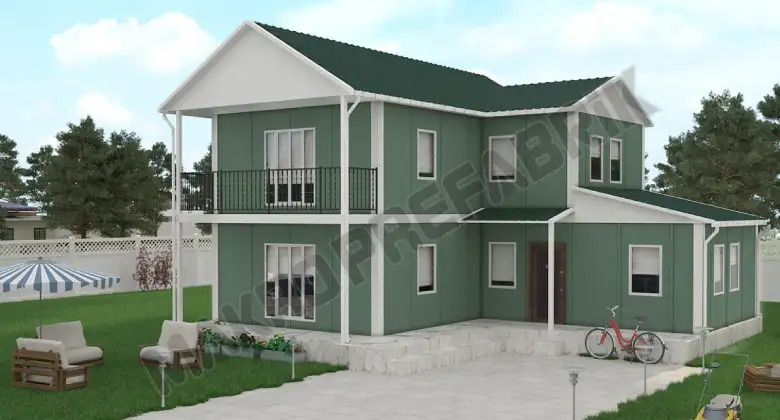
In these types of homes, insulation is applied in two ways. The first is primary insulation, and the second is side insulation. Looking at the primary insulation, we see that 80 mm thick EPS foam with a density of 16 kg/m3 is used on the interior and exterior walls of the homes. Additionally, for customers who request it, any desired insulation material can be used for the primary insulation. Furthermore, as an optional material, 80 mm thick rock wool can be used, and customers' preferences are taken into account in this regard. When it comes to the ceiling, we see that 80 mm thick glass wool is used as well.
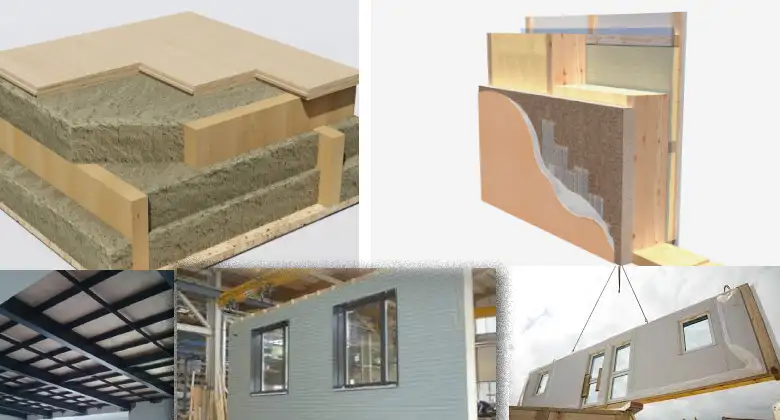
Let's closely examine all these primary insulation works. People who have previously stayed in tents know that when the sun rises, the tent's body absorbs the heat directly. If we analyze the same scenario in these homes, the exterior walls heat up when the sun hits them, but since this heat is not reflected onto the interior walls, the inside of the house remains cooler. Thus, with this insulation, you can achieve both heating and cooling inside the house. The fundamental principle of insulation is to prevent the outdoor climate from being reflected inside.
For side insulation, PVC windows and galvanized sheets used on roofs are employed. These windows and galvanized sheets are highly insulative. Galvanized metal can heat up due to the sun, but it does not transfer heat inside because, underneath the galvanization, there are many materials like fiberglass wool, preventing heat reflection into the interior.
Electric Coolers
When we think of electric coolers, air conditioners and fans come to mind immediately. These coolers operate by using electricity to cool our homes. This method can be suitable for users who want rapid cooling, but it is also true that this method is not very healthy. We especially recommend avoiding excessive exposure to air conditioning cold. Many people suffer from colds similar to the flu during the summer due to this exposure.
Regarding fans, situations such as wind impact can be observed. Instead of directly exposing yourself to the airflow, you can place a block of ice in front of the fan and direct the airflow into an open area of the house.
Focus on Your Body Temperature, Not the House Temperature
Until now, we have focused on the temperature of the house because the indoor temperature inevitably affects the people living inside. However, instead of cooling the house directly, you can try cooling your body. You can make and drink a cold fruit smoothie immediately in your portable home or take a quick shower. Additionally, wearing loose and light-colored clothes can create a natural cooling effect.

Close the Doors of Unused Rooms
When a house is built, some areas are shaded while others receive sunlight. Generally, the south-facing side gets the morning sun. This sunlight enters the house through the windows. The main factor that heats the interior begins here. To prevent heat from spreading, you can close the doors of unused rooms. If you are running an air conditioner, closing the windows will help the house cool down faster. The same applies to fans as well.

This is not the only portable structure used in this area. When we hear "container house," we immediately think of affordable small structures. While it is true that they are inexpensive, some users create wonderful designs with these containers because they allow architectural freedom. Containers can be combined, and insulation work has also been done on these structures. Therefore, you can cool these structures using the tips mentioned above.

In this article, we have tried to explain how you can cool these houses. By reading this article, you can keep your home cooler as well.