
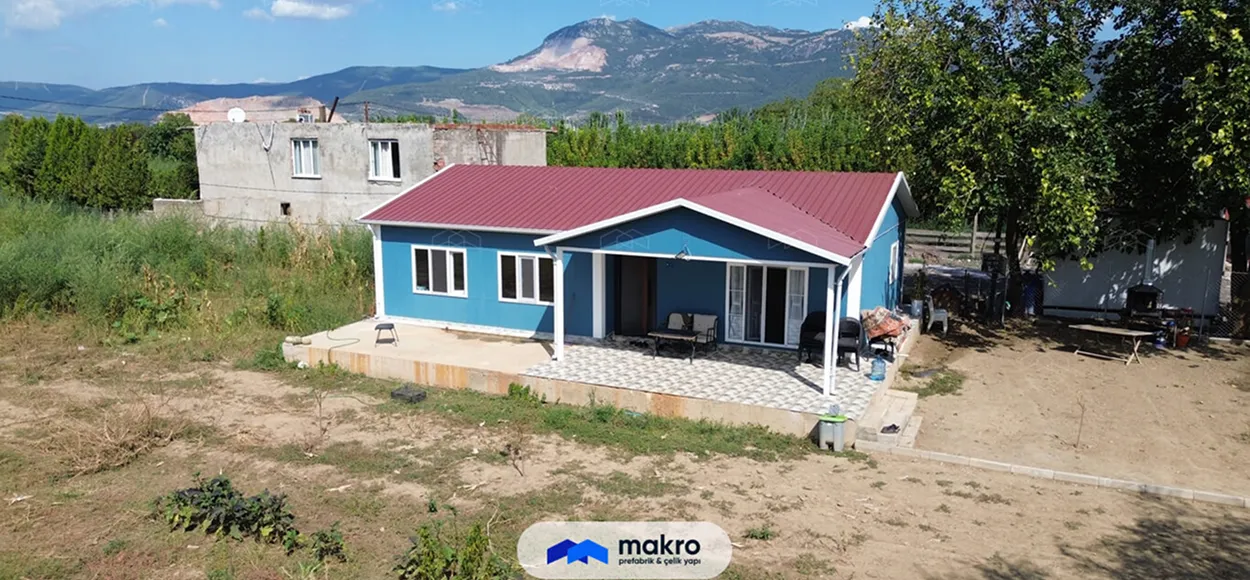
The construction site office; is not a space with a desk and chairs, but the center where the project is managed, communication is established, document flow is carried out, and team coordination is ensured. Therefore, choosing the right office solution for the construction site directly affects the speed and order of the work. A well-designed prefabricated office adapts to site conditions, accelerates installation, and provides operational continuity throughout the project. In large-scale prefabricated construction site arrangements, the location, comfort, and infrastructure of the office become critical factors that determine daily efficiency.
The healthiest way to start the selection process is to clarify what the office will be used for. Will it only be the workspace for the site manager, or a shared center used by technical teams as well? How many people will be inside at the same time during the day? Will meetings be held, guests received, is there a need for filing and archiving? The answers to these questions influence every decision from interior layout to square meters.
Another important factor is the duration of use. In short-term projects, solutions that are more practical and quick to install come to the forefront, while in long-term sites, durability, insulation, and ease of maintenance become much more decisive. Remember that the office is not only a workspace; it also serves multiple functions such as planning, reporting, site coordination, and sometimes rest breaks. Making measurements and planning decisions without clarifying needs can lead to unnecessary revisions and increased costs on site.
The proper functioning of the construction site office often begins with its correct placement. Factors such as proximity to high-traffic entry-exit areas, relationship with security points, distance from vehicle routes, and material storage areas affect accessibility and working comfort. If the office is placed too isolated, communication slows down; if positioned in a very busy area, noise, dust, and movement reduce efficiency. Finding the right balance is important to maintain the project’s tempo. Ground preparation is also the most unseen but critical part of the choice. Ensuring the surface is level, planning proper drainage, and reducing the risk of water pooling prevent problems such as settling, door-window misalignment, or loss of comfort over time. Logistics for transportation and installation must also be considered. Crane access, truck turnaround areas, safety during installation, and potential changes in site routes as the project progresses directly influence placement decisions. In large-scale prefabricated construction site setups, this planning becomes even more important; because even a small change later can cause significant time loss.
The construction site office is used at different times of the year, sometimes under conditions with high day-night temperature differences. Insulation performance not only affects comfort but also energy costs. Panel thickness, insulation material, joint details, and sealing applications should be evaluated together. In windy areas, heat loss as well as dust and air leaks reduce indoor quality. If condensation risk in humid regions is not properly addressed, an uncomfortable environment can develop over time on interior surfaces. Ventilation solutions come into play here. Sufficient natural air circulation should be provided while maintaining a balance that does not increase heat loss. The exterior surface durability must also be suitable for the site. Risks such as color fading on sun-exposed surfaces or deformation of coatings in high-impact areas can be minimized through material selection. Maintaining the office’s form over a long period in the busy pace of the site directly supports the overall organization of the project.
Interior planning is decisive for the office to adapt to daily workflow. The placement of work desks, cabinet and shelf areas, the arrangement of equipment such as printers, and the width of passageways affect ease of movement inside. Instead of focusing solely on square meters, designing the usage layout inside yields better results. If meetings are to be held, considerations for sound distribution and privacy should also be made. Some sites may require a small tea-coffee corner or mini kitchen area inside the office. When planning these areas, water connections, drainage, and hygiene conditions should be taken into account. For long-term projects, wet areas such as toilets and showers may be needed; in this case, infrastructure and ventilation should be planned more meticulously. Non-slip and easy-to-clean flooring provides practicality in intense site conditions. When the interior ergonomics are properly established, teams not only work more comfortably but also produce work faster and with fewer errors.
For the construction site office to function as a center, infrastructure quality is essential. The number and placement of electrical outlets should be determined according to actual usage scenarios. In site offices, computers, printers, modems, lighting, and air conditioning often operate together. The fuse system, cable cross-sections, and protection devices must be correctly selected. Lighting should be at a level that does not cause eye strain and supports the working order; a balance between natural and artificial light should be established as well as possible. Data and internet infrastructure have become almost mandatory for reporting and project management on site. Proper placement of modems and network equipment, cable channels, and connection points ensures that subsequent additions proceed more orderly. On the security side, lock systems, window security, outdoor lighting, and if necessary, camera infrastructure are prioritized. Security in offices containing documents and equipment is critical not only against theft but also for business continuity.
Choosing the right product is as important as working with the right supplier. Production standards, material quality, the experience of the installation team, and after-sales support determine how quickly problems are resolved on site. Working with strong brands that have experience in manufacturing and site installation can make process management more predictable. Details such as what the warranty covers, maintenance recommendations, spare parts, and service access should be clear. Because even a small malfunction on site can disrupt office use and slow down workflow.
When evaluating costs, focusing only on the purchase price can be misleading. Installation duration, transportation conditions, energy consumption, maintenance needs, and possible revisions determine the total cost. Therefore, when comparing offers, it is necessary to ensure that technical details are evaluated on the same basis. As the project grows, a well-planned prefabricated office investment becomes more apparent in its returns; because it provides less interruption on site, more organized coordination, and stronger work discipline.