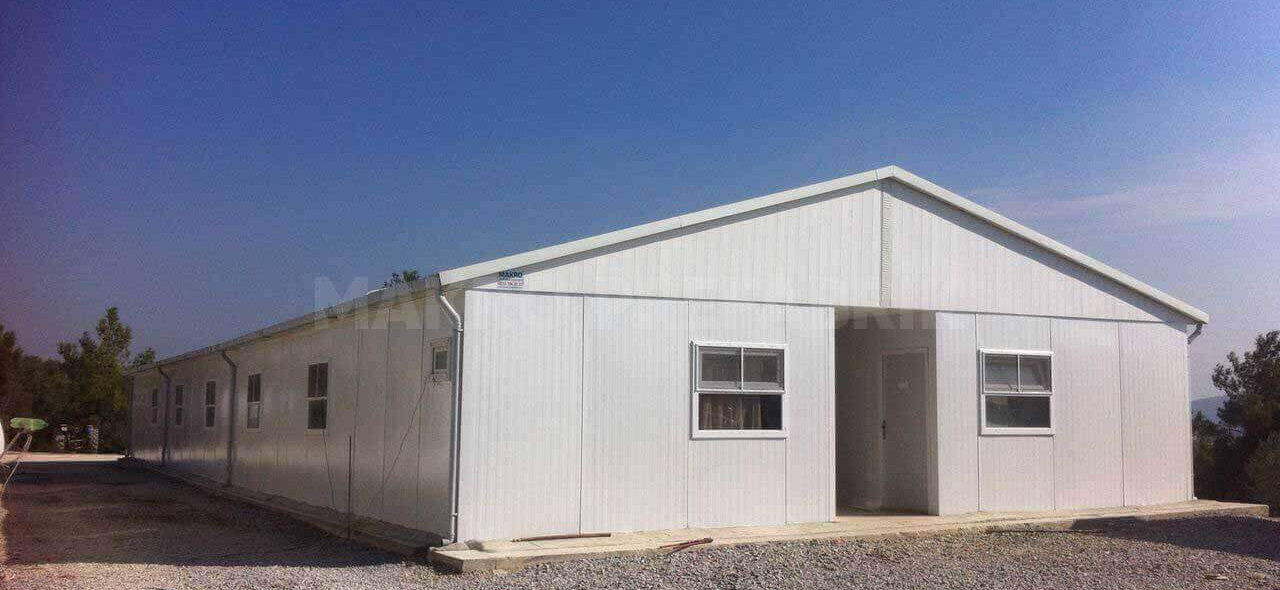
Portable construction site buildings are widely used in the construction industry due to advantages such as quick installation, portability, and cost-effectiveness. This guide explains the step-by-step installation of a prefabricated site model. If you are considering building a site building, you can easily manage the process by following these steps. The first step is to plan the installation process and prepare accordingly. First, determine the area where the building will be installed and obtain the necessary permits. Then, carefully review the dimensions and assembly instructions of the site building. Procure the necessary equipment and materials, assemble the installation team, and ensure that the ground where the building will be placed is level and solid. Make the necessary ground corrections and prepare a concrete foundation if needed. Then, create the foundation of the building. The foundation will ensure the building is placed securely and stably. Assemble the foundation parts according to the assembly instructions and secure them to the ground.
Now, it’s time to install the wall and ceiling panels. Place the panels in the correct order and secure them to each other. Join the panels according to the assembly instructions and use additional supports if necessary. Install the doors and windows of the building. Fit and secure the parts into the properly cut door and window openings. Carefully align the doors and windows and secure them according to the assembly instructions. After completing the wall and ceiling assembly, you can proceed with interior and exterior finishing. Install the necessary electrical wiring and other systems for the interior. Paint or cover the exterior facade as desired. When the installation is complete, perform final inspections of the building. Ensure all connections are secure and the building is stable. Finally, deliver the building to the client or user and provide the necessary instructions. This is how a site model is installed step by step. It is important to be careful at each step and to follow the assembly instructions. This way, you can experience a quick and trouble-free installation process.
Construction work often requires long and intense hours, making it physically demanding. In such work environments, it is extremely important for workers to have access to healthy nutrition and proper rest breaks. At this point, the use of canteens on construction sites comes into play, increasing both worker productivity and satisfaction. Canteen use on construction sites provides workers with the opportunity to eat healthy and balanced meals. Regularly offered healthy meal options help workers maintain their energy levels and work effectively throughout the day. Well-nourished workers improve their work performance while also reducing the risk of illness. Gathering in the cafeteria strengthens the sense of unity and solidarity among workers. Coming together around a shared dining table increases communication among colleagues, supports team spirit, and encourages collaboration. This contributes to a positive atmosphere in the work environment. Using canteens on construction sites is also a way to enhance workplace safety. Workers do not have to leave the construction area during breaks and do not need to search for food in traffic or dangerous areas. This helps prevent work accidents and injuries. Taking regular meal breaks allows workers to rest and recharge their energy levels. Rested and well-fed workers continue their work with greater focus and efficiency. This ensures that project processes progress more quickly and effectively.
Construction sites play a vital role in accommodating workers, especially in remote areas or outside the city, where housing needs are essential. Having a comfortable and secure place for workers to stay in such projects is a key factor influencing both employer and employee productivity. This is where prefabricated house prices come into play, offering an affordable solution just like dormitories. These dormitories are modular building components that are pre-manufactured in factories and transported to the construction site. Thanks to this feature, dormitories can be quickly and easily assembled on-site. Compared to traditional housing construction, they are ready for use in a much shorter time, saving both time and labor.
These structures are easily portable and can be reassembled as needed. Once a project is completed, the dormitories can be moved to another construction site or warehouse and reused. This allows employers to utilize their assets efficiently and make long-term investments, all while prioritizing the comfort and safety of workers. Well-insulated, ventilated, and equipped with heating/cooling systems, these buildings provide comfortable accommodation in all seasons. They are also equipped with safety features such as security equipment and fire extinguishing systems to ensure worker safety. Additionally, they can be produced using environmentally friendly materials and designed for energy efficiency. This contributes to the preservation of natural resources and reduces energy consumption. Furthermore, the use of recyclable materials minimizes waste. Such dormitories increase worker satisfaction. Having a comfortable and secure living space positively impacts morale and motivation, which in turn enhances work efficiency and contributes to project success.