When a new building need arises, one of the first questions people ask is about size. If the area is small, no one wants a cramped layout; if it is large, unnecessary costs are avoided. This is exactly where modular production logic comes into play. Manufacturer pages in the sector clearly show that these structures can be expanded for different purposes and combined side by side or as needed to create larger volumes. Still, the answer is not a simple “yes.” Flexible dimensions can be produced depending on the need, but each project is evaluated separately based on transportation routes, weight, site installation, and usage scenarios. Research on modular structures also emphasizes that size decisions should be considered from the very beginning together with route, weight, distance, and site accessibility.
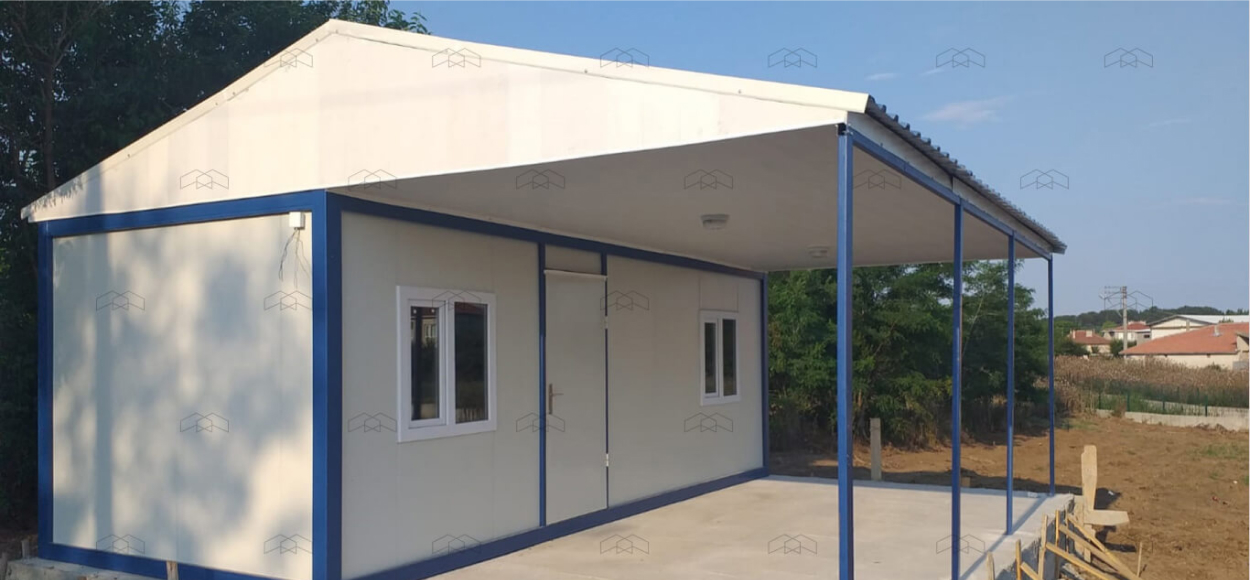
In practice, the answer is usually yes—but only with smart planning. Manufacturer content often describes expandable solutions alongside standard sizes. It is seen that modular structures can be combined in different sizes and shapes, with basic measurements such as 260 cm height, approximately 298 cm width, and 700 cm length for residential-type models. At the beginning, there is usually a main module, and as the project grows, this core is expanded with additional units rather than left alone.
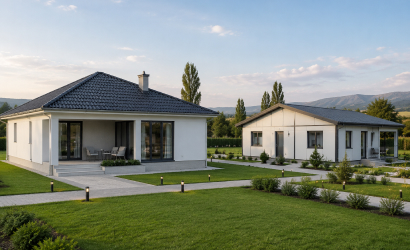
In container structures, the most important difference is that size is not just considered on paper but in actual use. A layout for a family home is not designed the same as a site office. In some projects, a single unit is enough; in others, two modules placed side by side create separate living and room areas; and in larger projects, multi-module configurations are preferred. While the idea of producing in any desired size may sound unlimited, real success lies in matching the size precisely to the need.
In office container planning, size decisions become even more function-oriented. Manufacturer pages show that options around 42 square meters are commonly preferred for small teams, while larger needs can lead to solutions ranging between 210 and 294 square meters. This alone highlights an important point: modular office structures are not restricted to a single fixed size. As the number of employees increases, meeting room needs arise, or management and operational areas need separation, the layout can expand accordingly. A good project evaluation does not only focus on square meters. Window placement, entry-exit flow, desk layout, waiting areas, wet space requirements, and insulation layers also directly influence size decisions. Official product pages often present different layout schemes, single or double-story options, and configurations shaped by usage purposes. In practical terms, if people can move comfortably inside, desk arrangements are not cramped, and entrances do not interrupt the workspace, the right size has been achieved.
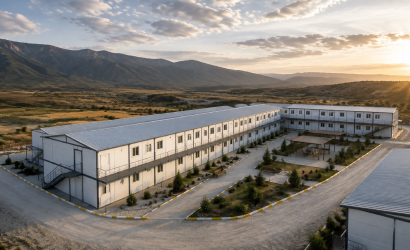
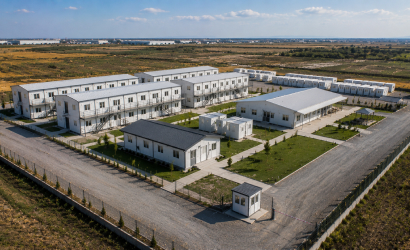
The container concept offers a flexible solution here. The structure does not have to be considered as a single unit. Modules can be placed side by side, connected with corridors, arranged opposite each other to create a courtyard-like feel, or even designed as two-story structures depending on the project. Manufacturer content frequently emphasizes quick installation, portability, and modular expansion. This allows meeting initial needs first and then gradually expanding the space as required. Such an approach prevents unnecessary burden. Instead of building a massive structure from the start and leaving half of it unused, starting with real needs and expanding over time is a more efficient strategy. Whether used as a construction site, sales office, temporary management unit, or living space, modular design provides the comfort of growing the area step by step, making the decision process much easier.
While approaching the desired size, certain technical limits come into play:
Although this list may seem technical at first, its practical meaning is quite clear. A very large volume can be designed on paper, but if the module is damaged during transport or cannot reach the site, it is no longer a real solution. Research on volumetric modular construction in the United Kingdom identifies road conditions, bridge limits, module size and weight, and secure fixing during transport as key risk areas. The same study also notes that large window and door openings increase the risk of damage during lifting and transportation. In other words, as size increases, engineering precision must also increase.
Even though production in desired sizes is possible, it does not always require a single-piece structure. In most projects, safer, more economical, and faster solutions are achieved through multi-module configurations. To avoid alignment errors, tolerance differences, or assembly sequence issues during site installation, it is recommended that size decisions be finalized before production. Modular construction research suggests that the entire process—from factory to site—should follow a unified quality control approach.
Users who need large spaces often want to achieve the result in one step. This is understandable—people prefer to complete the process at once. However, in modular structures, the most efficient results come from clearly defining needs at the beginning. Questions such as how many people will use the space, what functions will be included, whether the structure will be temporary or permanent, whether relocation is possible, and whether wet areas are required help determine the right size more easily. Early planning also makes a difference in transportation and site installation. Research suggests that modules should be inspected before leaving the factory, protected against moisture and impact during transport, and checked again upon arrival at the site. In large projects, problems often arise not from production but from logistical details identified too late. Therefore, a good project is not just one that provides large space—it is one that is easy to transport, simple to install, and comfortable to use without feeling cramped.