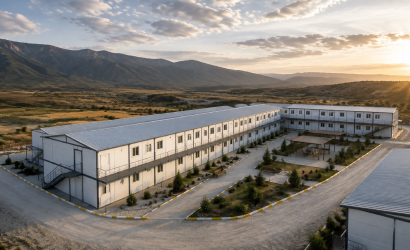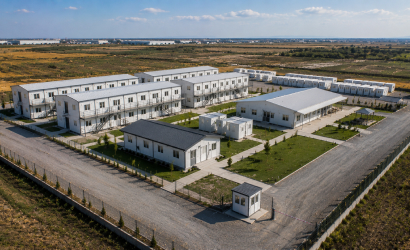
Management, maintenance, quality, production planning, and shipping teams in factory sites need to work close to the field simultaneously. The requirement facilitates decision-making without disconnecting from the production line and enables quick intervention in instant problems. Therefore, establishing an integrated, organized, and controlled work area on-site is not just about comfort but is a direct part of operations management. A prefabricated office area correctly positioned within the field consolidates many processes, from visitor acceptance to shift coordination, quality records, and meeting arrangements. When planned considering factors like noise, dust, and traffic in the production area, a more manageable safety environment is created.
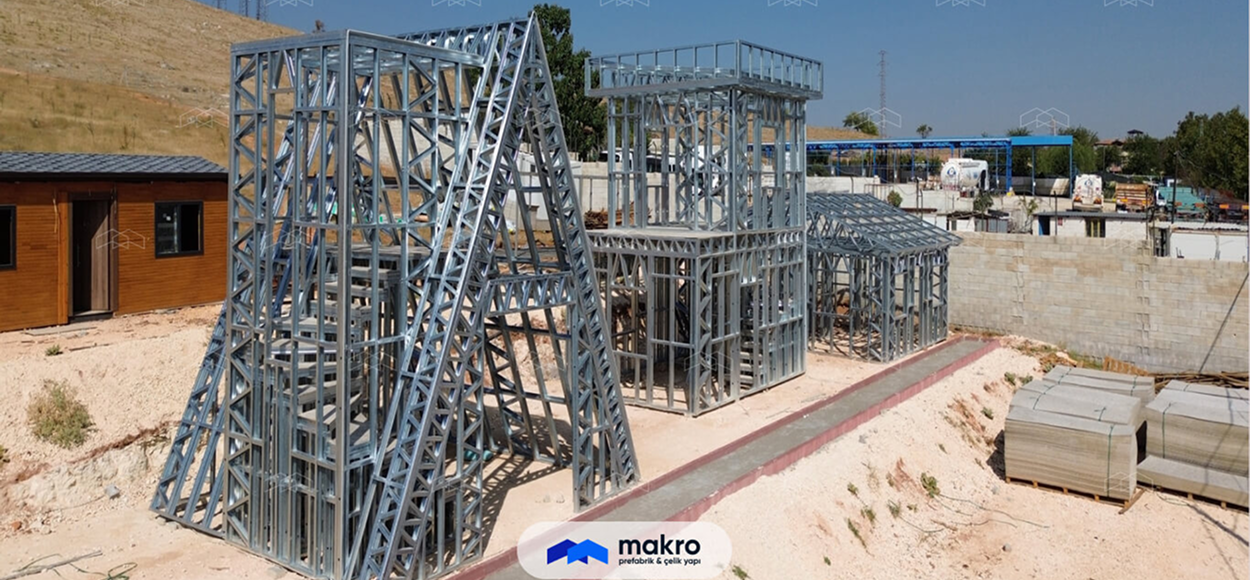
One of the most critical issues in factory sites is to bring a new area into operation without slowing down the work tempo. Thanks to the modular production approach, installation time on-site is shortened; this provides significant flexibility for capacity increases, line revisions, or temporary project periods. It is also emphasized in industry sources that modular offices can be quickly assembled on-site and made ready for use. Portability does not only mean relocating. The ability to reposition the same structure according to different layout plans; during new line openings, warehouse expansions, or periods of changing site traffic, reduces planning errors. It makes space management within the factory more sustainable.
Every structure established on the factory site should be considered together with the approach to worker health and safety. The framework for occupational health and safety in workplaces in Turkey is defined by Law No. 6331 on Occupational Health and Safety. Within this framework, the office area must comply with the general OHS system on-site in topics such as emergency plans, safe evacuation, electrical safety, slip-fall risks, ergonomics, and order. On the fire safety side, critical issues include escape route design suitable for building use, fire detection and suppression infrastructure, material behavior, and the continuity of escape paths. The regulation on fire protection of buildings sets out framework rules aimed at preventing fires and reducing loss of life and property during a fire. Details such as door directions, escape distances, signage, and accessibility in the office area established on the factory site should be evaluated according to this approach.
Office performance is measured not by square meters but by the continuity of comfort inside. If effects like excessive heat in summer, heat loss in winter, and air circulation changes throughout the day are not well managed in factory sites, work efficiency drops. In terms of thermal insulation, TS 825 standard in Turkey regulates technical frameworks such as energy limits and heat transfer coefficients; it is noted that energy approaches are improved with updated versions of the standard. Acoustic comfort is as important as thermal insulation. In offices located close to production noise sources, wall-roof layers, door-window sealing, and interior surface treatments are decisive for phone calls, meeting quality, and attention span. The insulation plan should be addressed not only with temperature goals but also with noise control and humidity balance.
When aiming for temporary or permanent use within the factory, prefabricated construction site planning requires correct initial layout and infrastructure setup. The location where the office will be placed should be evaluated together with ground level, rainwater drainage, pedestrian and vehicle pathways, distance from energy lines. Creating a flow plan that does not interrupt daily production traffic when setting up the installation area reduces subsequent relocations and on-site chaos.
This reduces later corrections on-site. Additionally, details such as the direction of the office entrance, waiting area layout, and placement of glass and frames, based on daily traffic and shift flow in the production area, become clearer from the start.
An appropriately designed on-site office increases meeting productivity, maintains the order of documents and quality records, and strengthens coordination during shift changes. As a result, it provides faster feedback to production and reduces communication losses. In maintenance fault processes, planning updates, and shipment management, a centralized working arrangement reduces the risk of faulty decisions. The best outcome depends more on the accuracy of planning than the type of structure. When location, insulation, safety compliance, and interior layout are considered together, the factory site office becomes not just an administrative room but a strategic component supporting production performance.
The most critical factor ensuring the longevity of office structures built on the factory site is regular inspection and not delaying minor interventions. Door-window seals, joint points, and roof details can wear over time under wind, rain, and dust loads. Regularly checking sealing tapes, silicone applications, and screw connections helps keep indoor comfort stable. Leaves and debris accumulating on the roof surface can clog gutters and cause water overflow, so cleaning during seasonal transitions should not be neglected.
Inside, electrical panels, socket lines, and lighting fixtures should be periodically reviewed. Vibrations and intensive use in production areas can increase loosening and contact issues. Filter maintenance of ventilation and air conditioning equipment balances energy consumption. If disassembly and reinstallation are planned, recording these steps ensures quick reversion to the previous setup after installation.