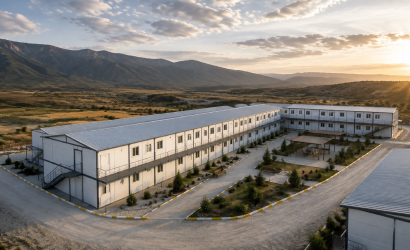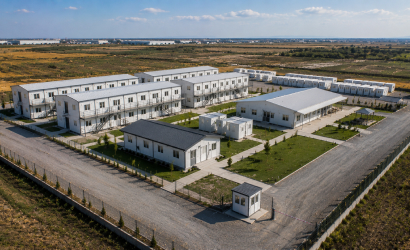
There are many different types of structures used in various fields around us. These structures are insulated and highly durable. The bathrooms of these structures are also built in a liquid-proof manner. But how? We also pursued this question and have detailed it in this article.
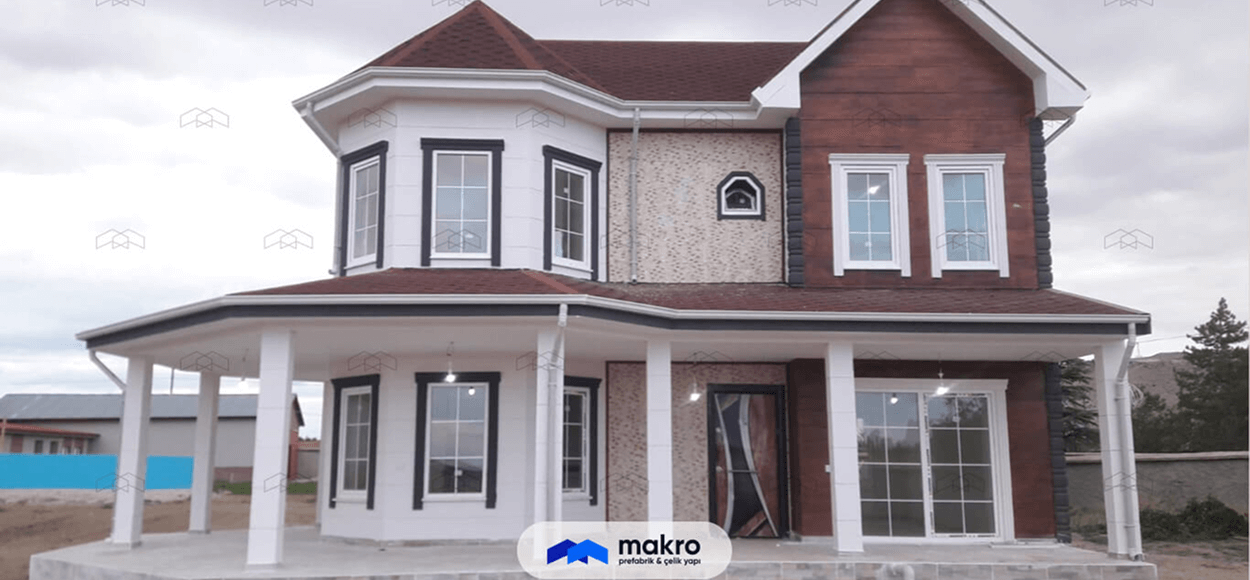
Recently, structures such as dormitories, dining halls, and offices produced in factories are being used in many different parts of our country. However, prefabricated villa models are also produced in the same durable manner. The bathrooms or shower areas in these houses are also built in a liquid-proof way. The bathroom areas of these structures are constructed through the following stages.
Concrete floor: Assuming the structure is built entirely on a flat concrete floor, a drainage system must be installed to evacuate the water inside the bathroom. This way, the drainage connection of the structure can be made during installation.
Drainage system: First, the sanitary installation of the structure is installed on the concrete floor. During this installation, a drainage system is also constructed to allow the water inside the bathroom to be drained. Then, epoxy coatings are used to insulate the entire floor.
Floor insulation: Insulating the floor is also very important because water can gradually cause decay in the areas it contacts. Epoxy is used for floor insulation, followed by a covering of insulation material, and then a plasterboard covering used in all structures. This way, the building's floor becomes completely insulated.
Bathroom cladding: After the insulation work on the floor, ceramic or PVC cladding is applied to make the bathroom resemble a typical bathroom. This makes the bathroom easier to clean. After laying the ceramic tiles, joints are filled, and the bathroom becomes usable.
Dining halls are used in many different places in our country. Because they are produced in factories, they are very durable and long-lasting. From this perspective, dining halls are generally used together with prefabricated dormitories. Because this makes these structures much more functional and practical. Additionally, there are sections within dining halls that increase usability. These sections are as follows:
There is always a kitchen in dining halls. However, in some areas, the kitchen section is removed because the food comes from outside. The kitchen section of dining halls is especially used in military areas. In these areas, food is cooked inside the dining hall. Moreover, the size of the kitchen can be adjusted according to your requests.
The food serving area is one of the indispensable parts of a dining hall. In fact, this is the only section that the institution purchasing the dining hall does not remove. Because every dining hall serves food. For this reason, a four- or five-sectioned food serving counter is installed in the food service area. Food is served through this counter.
The cold storage keeps fruits and vegetables fresh. However, if there is no kitchen inside a dining hall, the cold storage is generally not used much. Therefore, if there is a cold storage, it is built with high insulation and suitable for installing cooling systems.
Cleanliness is very important in dining halls. Therefore, even a small dishwashing station is present. Industrial dishwashers are usually used in this area. These machines spray very hot water, killing germs. This section is built to be completely waterproof.
Every dining hall must have an eating area. The size of this area can be adjusted according to the number of workers. The eating area can be arranged as à la carte or self-service if desired. However, the size of this area must be adjusted according to the number of workers you have. It should at least be half the number of workers so that they can eat in shifts.
Dining halls are used extensively in our country's construction sites, mining areas, and military zones. They are generally built on a flat, concrete floor. However, on construction sites, these structures are produced to be portable. Assuming they are permanently built on a flat concrete floor, the concrete floor must first be insulated. Otherwise, any area exposed to water can decay.
The installations pass over the floor insulation and are connected. Usually, the installations pass through the walls beneath the plaster, but if some installations need to pass through the floor, they are connected accordingly. Then, insulation material and epoxy coatings are applied for liquid insulation. Finally, the floor can be covered with PVC or ceramic tiles. Since the floor is waterproof, it becomes washable. You can also purchase and use one of these structures immediately.