People look at insulation when building a house or purchasing one of the manufactured structures in factories. There are many different materials used for insulation. One of these materials is EPS foam. This material provides quite high-quality insulation. Is that really so? We have detailed in this article the materials that make up EPS foam, as well as those that create the exterior appearance of structures.
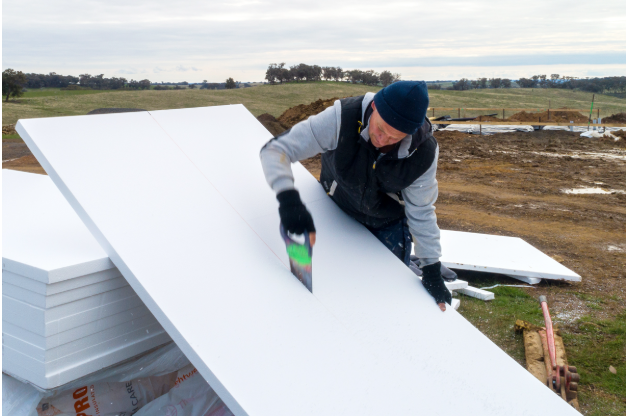
There are many different types of building models in many different parts of our country. In factories, produced at affordable prices and durable, prefabricated house models often use materials like EPS foam in their walls. EPS foam is a lightweight, closed-cell, high-insulation foam material obtained by expanding petroleum-derived polystyrene raw material with steam. It is most commonly used in exterior wall insulation, roof, and ground insulation.
The production process of EPS foam consists of 3 stages. First, polystyrene granules are expanded with steam, increasing their volume by 30–40 times. Micro-cells filled with air form inside, which is the main reason for its insulation properties. The expanded beads rest in silos for 12–24 hours. This stage is necessary to balance internal pressure and obtain stable foam. Afterwards, the beads are placed into large molds. They are fused together by steam and form blocks. These blocks are then cut into panels.
The insulating property of materials like EPS foam comes entirely from the closed air cells inside. It is one of the lightest insulation materials. It is the most economical insulation solution. EPS is used in 70% of insulation systems. It reduces heating and cooling losses by 30–50% and prevents thermal bridges on exterior walls. Because it is lightweight, it does not add extra load to the structure. Additionally, PVC windows are also among the most frequently used materials for insulation. We also discussed this topic in the next section.
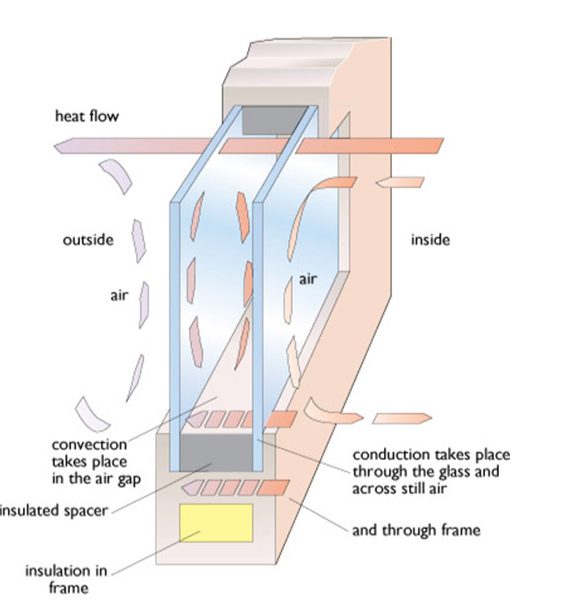
Throughout our country, these structures produced in factories are used in all four seasons. Because these structures are quite durable and affordable. Additionally, the insulation of these structures is also done very carefully. One of the materials used for insulation is PVC frame, double-glazed windows. This window system uses two layers of glass within a PVC frame with an insulated air gap. This gap is filled with air or argon gas to minimize heat loss.
If you are wondering how these windows are produced, PVC granules are melted in extruder machines at 180–200°C. Then, they are passed through molds to give the desired profile shape. The profile is reinforced with steel. This way, PVC sashes are created, and an aluminum spacer (fitil) is placed between the two glasses, which contains a moisture-absorbing molecular sieve. The gap is filled with argon gas. The perimeter is sealed with butyl and silicone to ensure airtightness.
These windows provide thermal, liquid, and sound insulation to the structure. In fact, with the argon gas squeezed between the two glasses, better insulation is achieved by 30%. The PVC profile, with its multi-chamber structure, further reduces heat loss. It provides sound insulation between 32 and 40 decibels. Different glass thicknesses increase soundproofing. The gasketed design prevents air flow. When insulation, stone wool, and PVC windows are properly applied, the home's insulation efficiency can increase by up to 50%. 25–35% of heat loss occurs through windows. Double-glazed PVC windows significantly reduce this loss. They prevent warm air from escaping in winter and hot air from entering in summer.
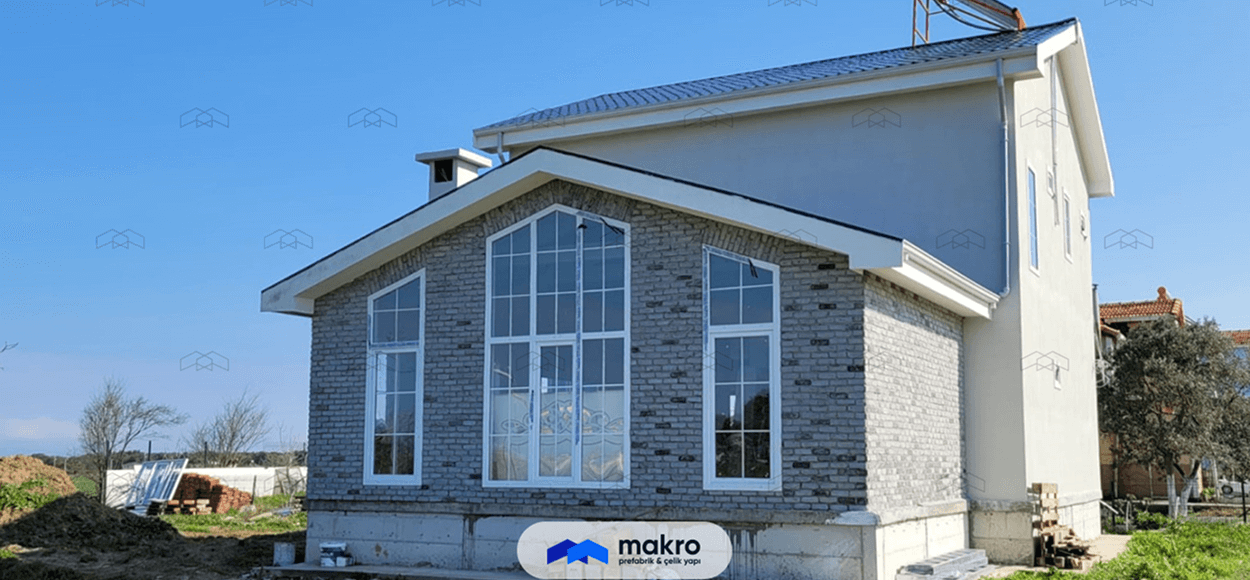
When looking at a house from the outside, it is quite difficult to tell whether it was produced in a factory or not. Ultimately, prefabricated house price is affordable, but the house is very durable and produced aesthetically. All houses today are produced with an aesthetic appearance. Behind this aesthetic look are the coatings applied to the exterior walls of the houses.
Sometimes, fiber cement board material is used on the exterior wall of factory-produced houses to give a more aesthetic appearance. Materials like fiber cement board are soft and can be shaped into any desired design, enhancing the exterior appearance of the house. This makes the house look more aesthetic and can also make it appear larger. Additionally, some people want their houses to have a wooden appearance. In this context, lath cladding can be applied. This achieves a more natural and wooden look. You can also purchase a house with the exterior appearance you want immediately.